Members of the team at the Extractive Metallurgy Hub. Photo: Murdoch University and the Extractive Metallurgy Hub.

Metallicum Minerals Corporation visit to the Extractive Metallurgy Hub, Murdoch University Rockingham Campus, March 2026
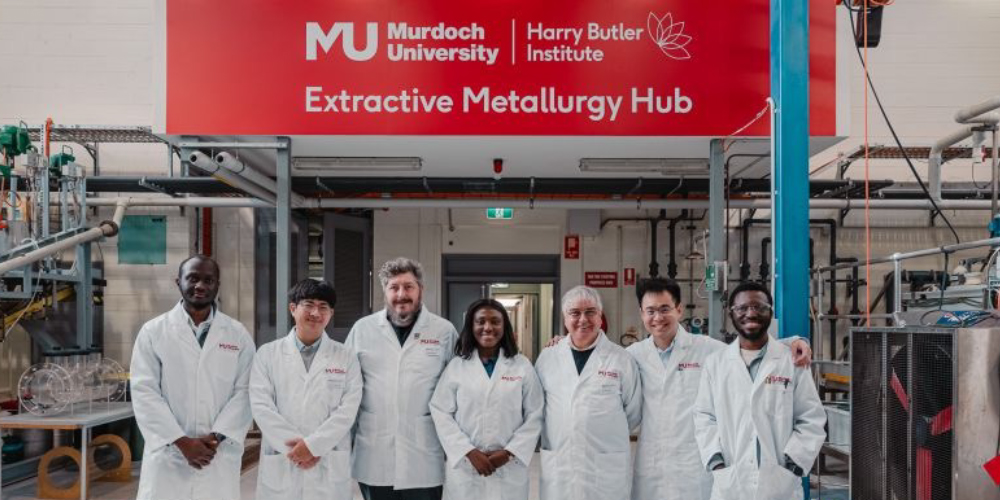
In March 2026, Metallicum Minerals Corporation’s Chief Operating Officer, Warren Wickman, visited the Extractive Metallurgy Hub (EMH) in Perth, Western Australia. The Hub is part of the Harry Butler Institute located on Murdoch University’s Rockingham Campus. Following a survey of Australia’s metallurgy research facilities, Metallicum Minerals Corporation (MMC) settled on EMH as the most advanced facility in the country to partner with for smelt REE metals– neodymium, praseodymium, terbium, dysprosium and samarium – then sinter these metals into magnets, to become the first company in Australia to do so.
These REE metals are vitally important for the production of high-performance permanent magnets and other future-facing technologies as the world’s economies continue to decarbonise and move towards an emission-free, electric future. These metals and the magnets which are produced from them are critical for electronics, medical devices, renewable energy, mobility, robotics and many defence applications.
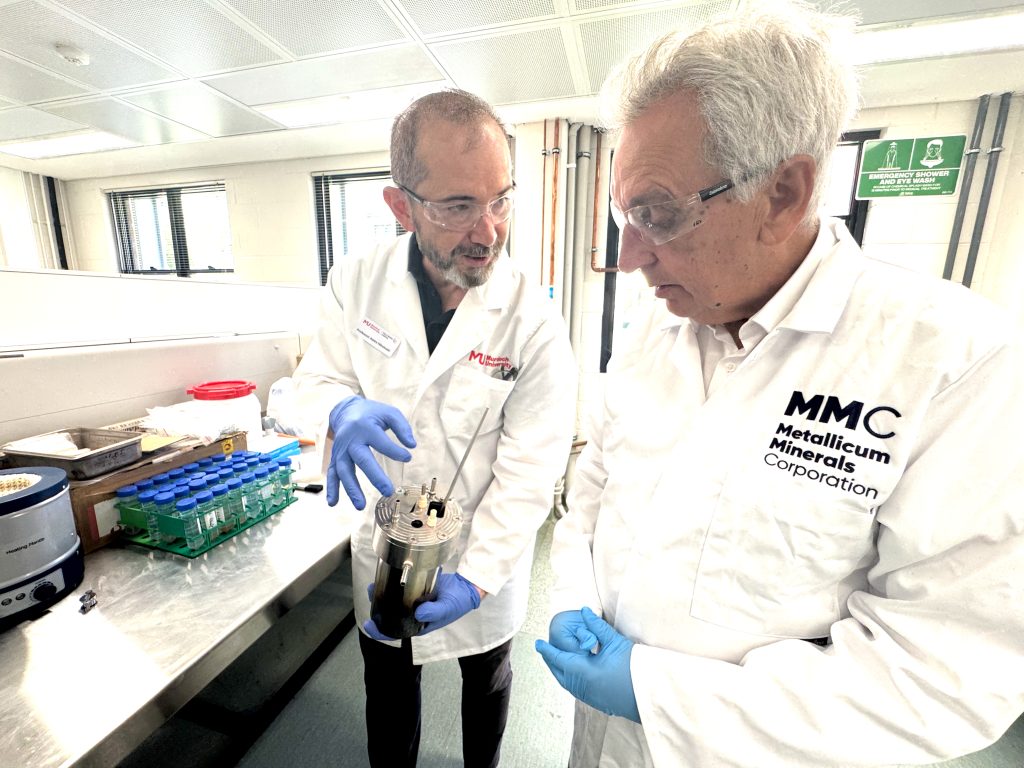
Prof. Aleks Nikoloski, the EMH Director, explaining to MMC Chief Operating Officer, Warren Wickman, the operating principles of a molten salt electrolysis reactor, featuring a graphite anode and a steel cathode configuration. Photo: Murdoch University and the Extractive Metallurgy Hub.
The EMH Director, Prof. Aleks Nikoloski said the Hub represents a significant step forward for the processing of critical minerals, which helps to consolidate Western Australia as a global renewable technology powerhouse.
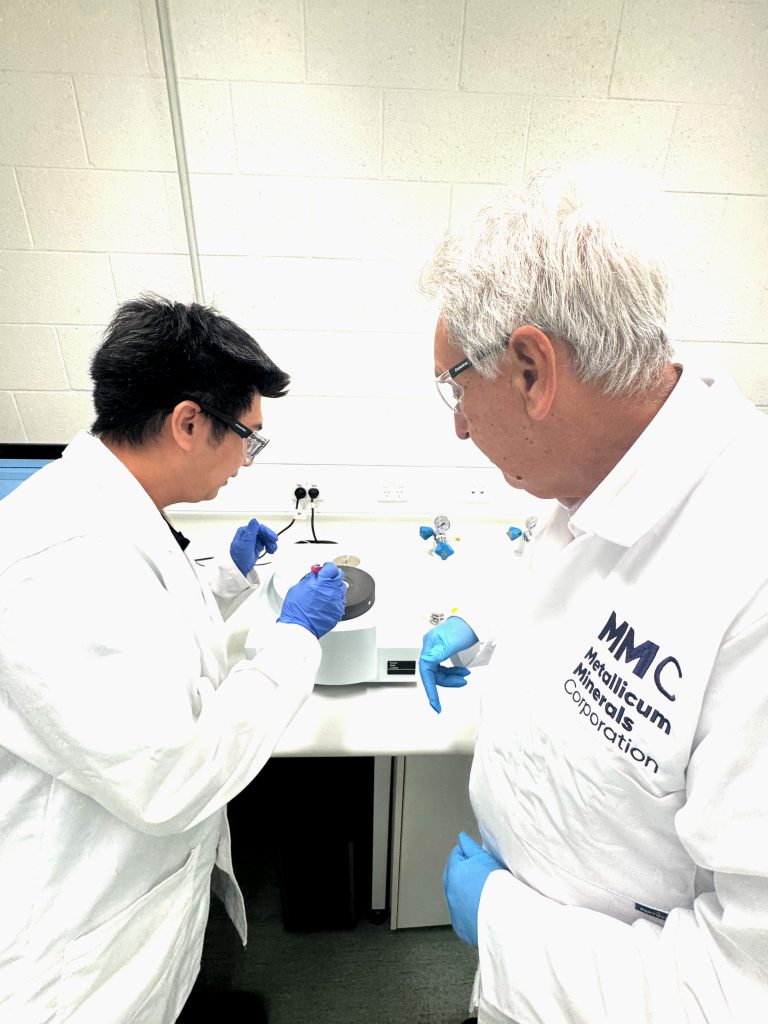
Dr Kuan-Ting Pan demonstrates a Thermogravimetric Analyzer (TGA)/Differential Scanning Calorimetry (DSC) instrument, which is equipped with a high-precision balance and furnace for measuring sample mass and heat changes as a function of temperature under a controlled atmosphere. Photo: Murdoch University and the Extractive Metallurgy Hub.
The establishment of the EMH was supported by the Minerals Research Institute of WA (MRIWA) and funding from the WA Government’s Investment Attraction Fund. At the opening of the Hub in July 2025, Magenta Marshall, the member for Rockingham in the Western Australia Legislative Assembly, said “the Hub offers a unique advantage in fostering real-world industry collaboration and innovation.” It is this spirit of collaboration and innovation which is driving MMC forward to pioneer this important sovereign capability for Australia.
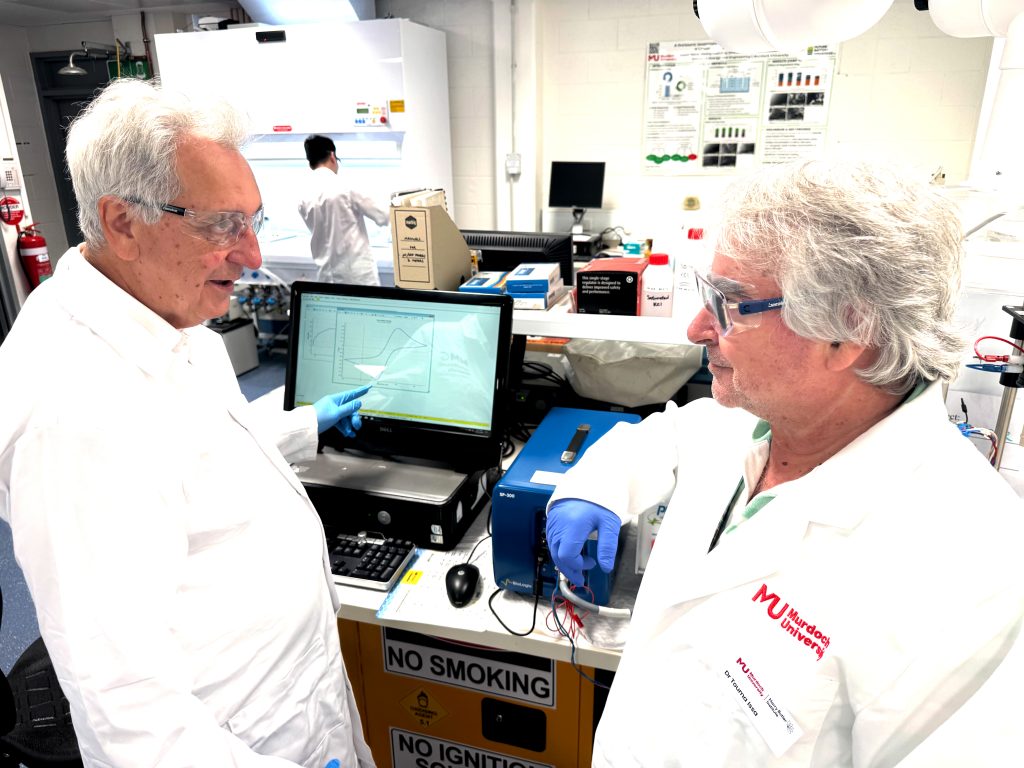
Warren Wickman asks Dr Touma Issa a question while discussing a high-precision electrochemical workstation (potentiostat/galvanostat), which is used for Cyclic Voltammetry (CV) and Electrochemical Impedance Spectroscopy (EIS) with a three-electrode setup to analyse redox processes. Photo: Murdoch University and the Extractive Metallurgy Hub.
While in Perth, Warren Wickman had the opportunity to discuss MMC’s plans with The Hon. David Michael, Minister for Minister for Mines and Petroleum, and Minister for Finance. Minister Michael said that MMC would be welcome to establish a presence in Western Australia and that the EMH was well-placed to assist MMC in achieving its goal of developing a sovereign rare earth processing capability in Australia.
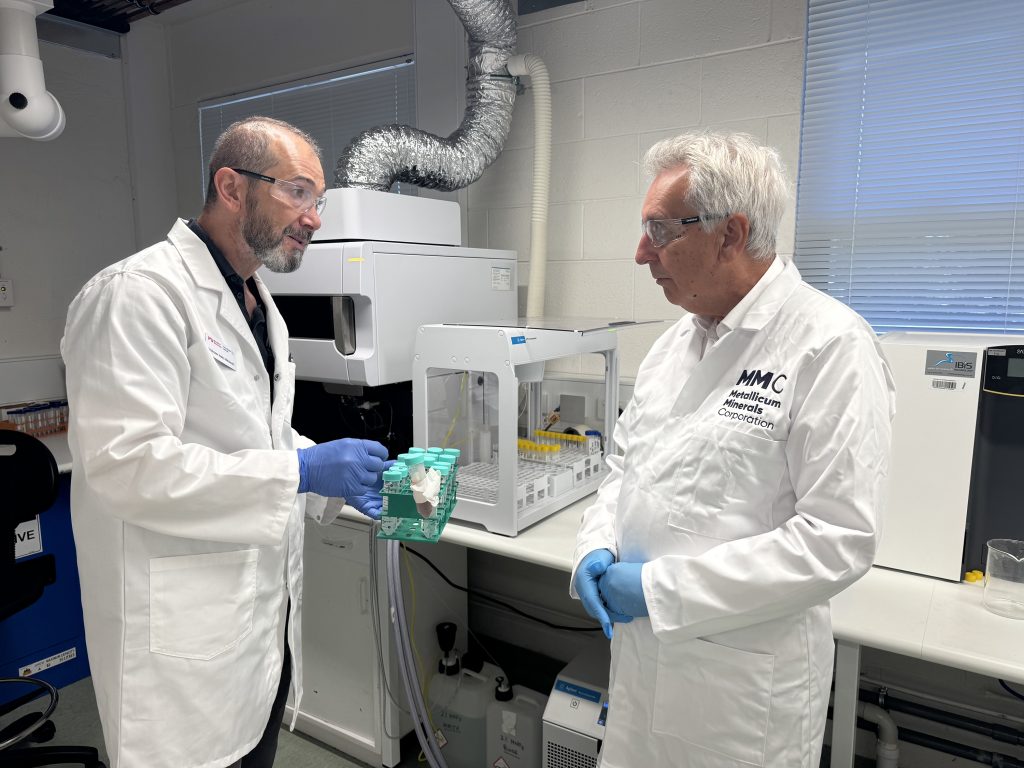
The analytical laboratory at the Extractive Metallurgy Hub employs an Inductively Coupled Plasma Optical Emission Spectrometer (ICP-OES) to conduct precise analysis of multiple elements. Here Prof. Aleks Nikoloski discusses the impact on elements with Warren Wickman. Photo: Murdoch University and the Extractive Metallurgy Hub.
Western Australia is acknowledged as a world leader in critical minerals, being home to many major industry players, including three of Australia’s most important REE companies – Lynas Rare Earths, Iluka Resources and Northern Minerals. As such, MMC sees Western Australia as the idea location to achieve its plans to develop Australia’s REE magnet-making sovereign capability.
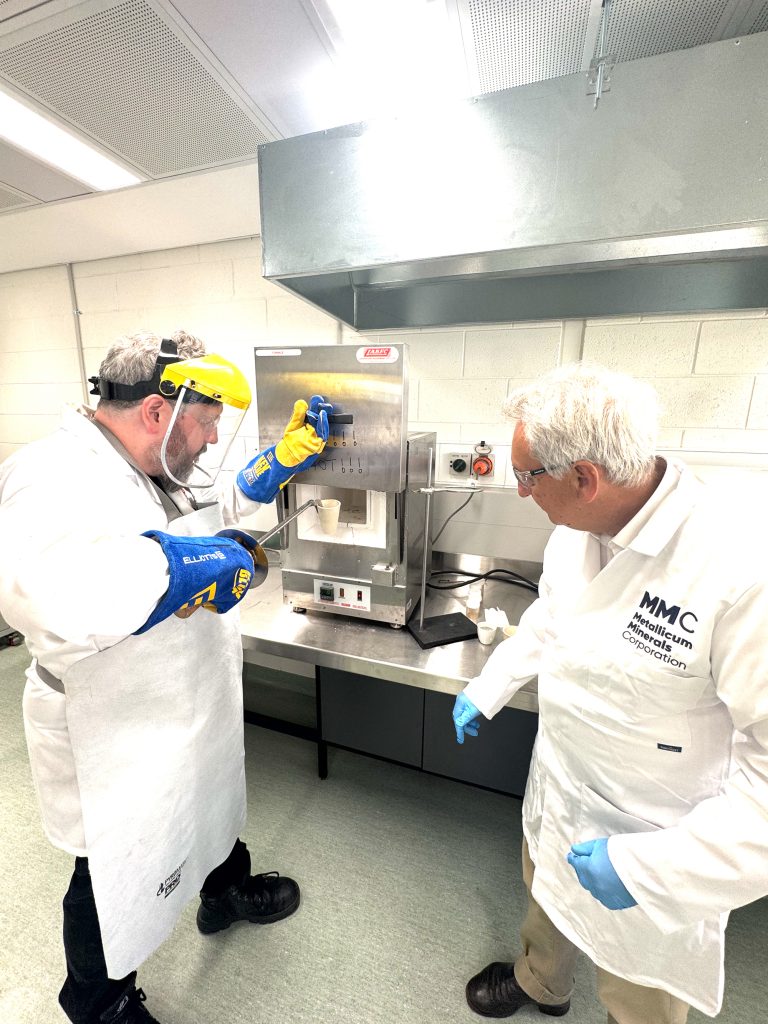
Dr Rorie Gilligan demonstrates to Warren Wickman how muffle furnaces and tube furnaces play a crucial role in pyrometallurgical processing by providing even heat distribution at high temperatures smelting.
Photo: Murdoch University and the Extractive Metallurgy Hub.